Charlotte, a vibrant city in the southeastern United States, has both the urban atmosphere of modern skyscrapers and tranquil parks and lakeside scenery. For independent travelers who do not want to drive or face parking problems, mastering the city’s public transportation and various shared travel methods can easily make it easy to enjoy.
1. Why choose “public transportation + shared travel”?
Avoid parking troubles
Parking spaces are tight in downtown Charlotte and around popular attractions, especially during events and activities, and it often takes a lot of time to find a parking space. Switching to public transportation and shared travel can directly reach the door of the destination without having to detour to find a parking space.
Save costs
Private cars have high daily costs, including fuel, parking fees, insurance and maintenance fees. Bus monthly passes, one-way light rail tickets and single-trip charges for shared bicycles and scooters are more economical in combination; for short-distance multiple trips, it is more cost-effective.
More environmentally friendly and low-carbon
Buses and rail transit have low carbon emissions, and electric shared bicycles and scooters are also green travel tools. Reducing self-driving travel will help improve urban air quality and meet the environmental protection concept of more and more travelers.
Experience local life
Take the light rail to travel between the city and the suburbs, take the bus to appreciate the community culture, and queue up with locals to wait for the bus, which can allow you to experience Charlotte’s urban rhythm and human touch more deeply.
2. In-depth analysis of the MARTA light rail system
2.1 System overview and line distribution
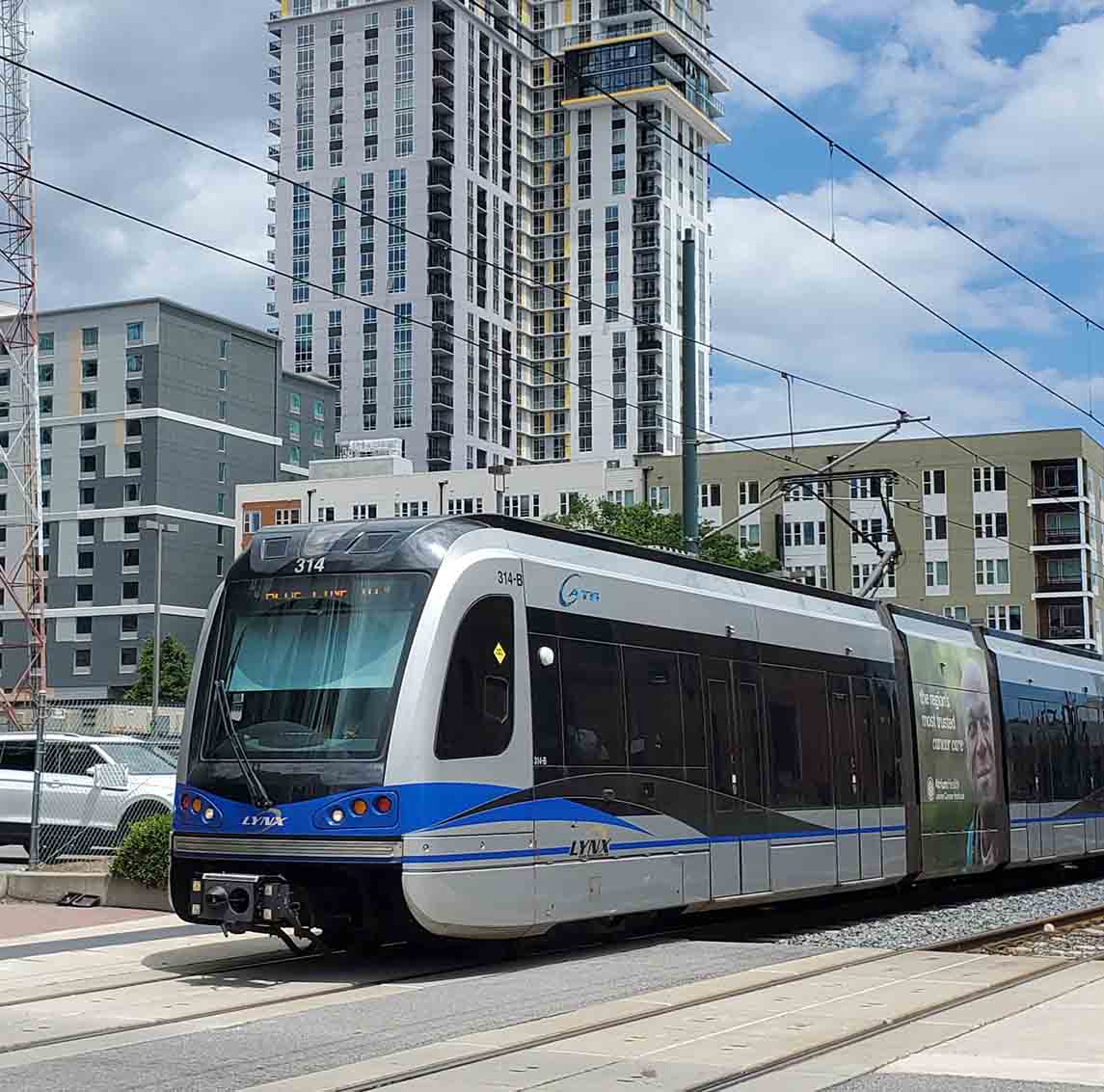
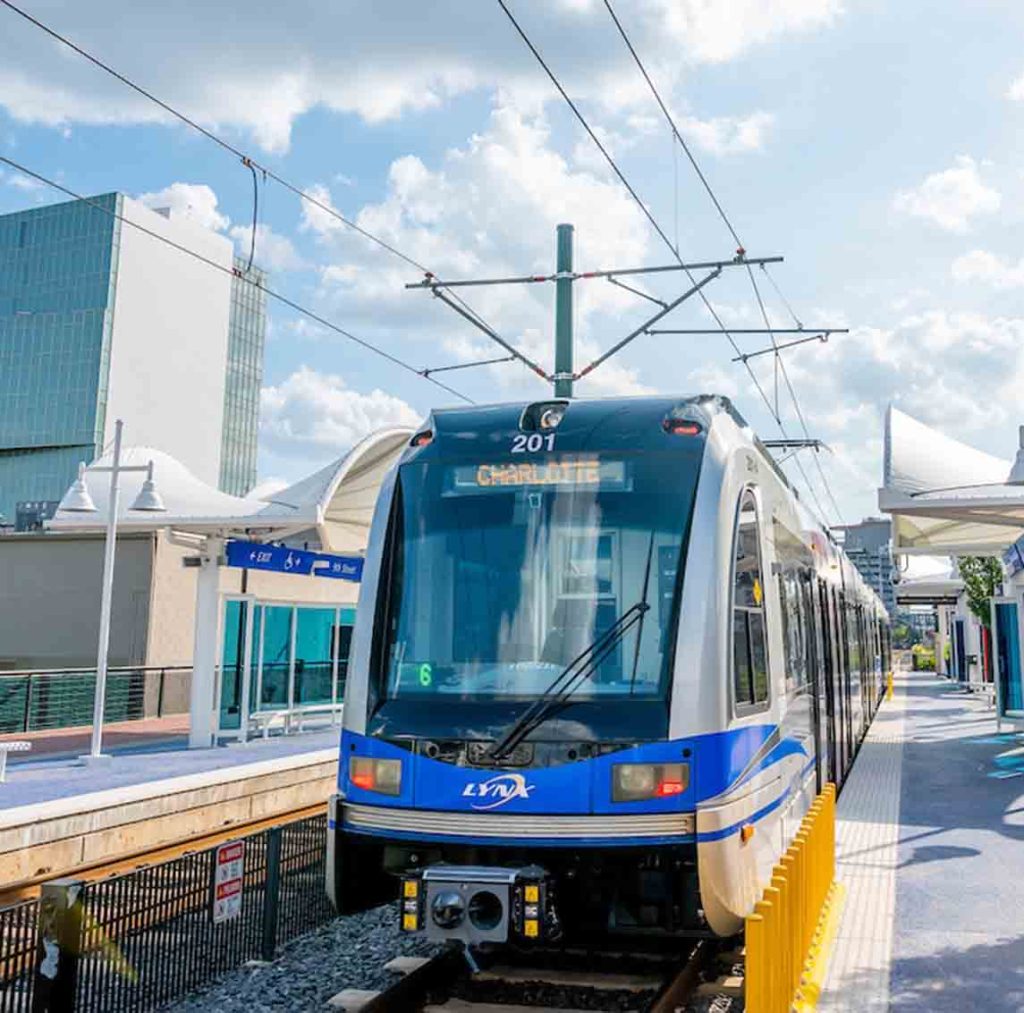
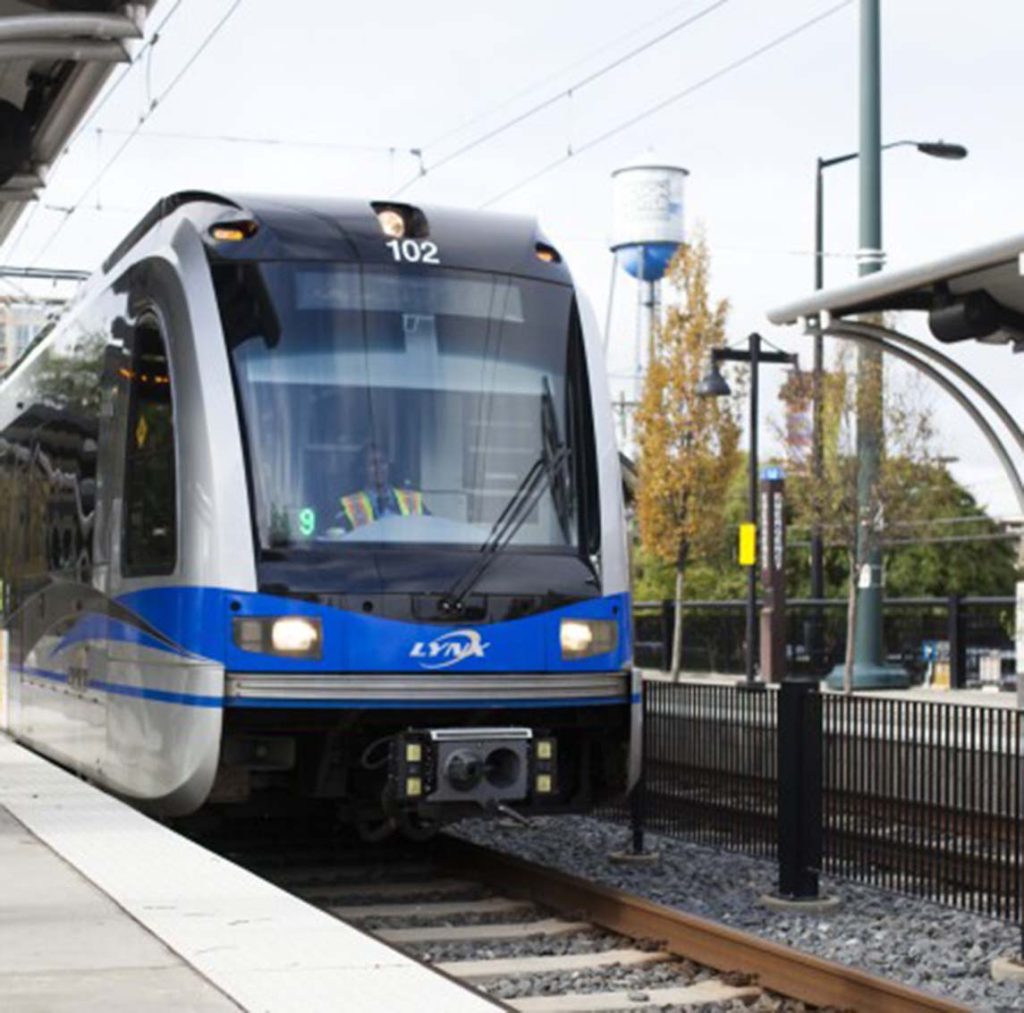
Although MARTA (Metropolitan Atlanta Rapid Transit Authority) originated in Atlanta, it has also formed a modern tram (Streetcar) called “CityLYNX Gold Line” and a light rail network of “LYNX Blue Line” in Charlotte.
LYNX Blue Line: Connecting the city center (Uptown) and the southern suburbs (South End, Sardis Road, etc.), the entire line is about 18.9 kilometers and has 16 stations.
CityLYNX Gold Line: A tram line with a total length of about 5 kilometers, running through the city center and the South District with a total of 16 stops, connecting multiple attractions and commercial streets.
2.2 Ticket purchase and card swiping guide
Single-trip ticket: Both the light rail and the tram can purchase a one-way ticket at the station ticket vending machine, which can be used for 90 minutes at a time and has unlimited transfers; the fare is generally US$2.20.
Day/weekly/monthly ticket: Frequent travelers can choose a day ticket ($5), a weekly ticket ($21) or a monthly ticket ($88), which is cost-effective and worry-free.
Card payment: Supports credit card, debit card or Apple Pay, Google Pay scan code payment to avoid queuing for tickets. You need to register the card at the ticket machine before using it for the first time.
2.3 Operating hours and frequency
Blue Line: Monday to Friday: 5:30–23:00; weekends: 6:00–22:00. The frequency is about 10 minutes during peak hours and about 15 minutes during off-peak hours.
Gold Line: Monday to Saturday: 6:00–23:00; Sunday and holidays: 8:00–20:00. The bus runs every 12 minutes.
2.4 Riding experience and tips
The car is spacious, equipped with USB charging ports and Wi-Fi, suitable for reading guides or working on the road.
The car is crowded during peak hours, so please avoid rush hours (7:30–9:00, 16:30–18:30) in advance.
The station signs are clear, but the lighting at some stations is a little dim at night. It is recommended to travel with friends and pay attention to safety.
3. In-depth experience of the bus network
3.1 Coverage and trunk routes
The Charlotte bus system is operated by CATS (Charlotte Area Transit System), which is mainly divided into urban buses and suburban express lines. The urban bus routes are most representative of trunk routes such as 90, 96, and 61, connecting popular communities such as Uptown, NoDa, Elizabeth, and Plaza Midwood.
3.2 Ticket purchase method and fare
One-way ticket: $2.20, unlimited transfers to light rail, tram and bus within 90 minutes.
Express Bus: Some suburban lines have express fare surcharge service, the fare is $3.50.
Day ticket and multi-day ticket: Same as light rail fare system, it is recommended to use a MARTA transportation card to store value.
3.3 Boarding and alighting process
Wait at the bus stop, get off first and then get on after the bus arrives, swipe the card or scan the code to get on the bus, if you need to get off, press the bell to remind the driver.
Some downtown stations have real-time arrival display screens, and you can also check real-time dynamics on the CATS official app.
3.4 Route recommendations
Route 90: Surrounding the city center, connecting the Reno Science Center, the History Museum and EpiCentre.
Route 61: Directly connected to the university area (UNC Charlotte), suitable for travelers going to the campus and surrounding shopping malls.
Express Line 3: Connects Concord Mills Shopping Center and downtown, suitable for a day of shopping.
3.5 Tips for Riding
The bus drivers are friendly and can ask questions or press the help button if you have any questions.
The bus stop signs often indicate the schools, hospitals, and shopping centers that pass by, which is convenient for quick positioning.
It is recommended to wait for the bus at a well-lit and crowded stop at night to ensure safety.
4. CityLYNX Gold Line Tram Guide
4.1 Line Features and Stops
The Gold Line Tram is a free experience route (some sections are free, and tickets are required for suburban sections). The carriages are small and unique, and you can appreciate the urban scenery of Uptown and the literary atmosphere of South End along the way.
Main stops: Central Station, Bank of America Stadium, South End Rail Trail, Atherton Place, etc.
4.2 How to ride for free or at a low price
Free zone: The first 5 stations are free with Uptown Central Station as the core; the sections beyond the free zone require card payment.
Tips for card payment: Be sure to swipe your card or buy a ticket at the station before boarding, and be careful to avoid being fined after the fee zone.
4.3 Sightseeing and check-in
The Gold Line tram travels through the streets full of art murals, making it an excellent mobile platform for photographing urban street graffiti and literary cafes.
There are creative markets, galleries and handicraft shops around many stations, suitable for “slow travel” exploration.
5. Shared bicycles and electric scooters
5.1 Main brands and distribution range
Lime/Bird/Spin: There are parking spots in the main commercial streets, subway stations and park entrances in the city, covering a radius of about 2 kilometers.
Charlotte B-cycle: A local shared bicycle system with point-to-point pick-up and return, suitable for short-distance shuttles.
5.2 Usage process and fees
Scan the code to unlock: After downloading the corresponding App, scan the code to unlock the vehicle; when the trip ends, lock it in the designated parking area and the system will automatically settle the bill.
Billing method: Generally, it costs $1 for the first 15 minutes, and $0.15 per minute after the time limit; B-cycle daily rental cards can be subscribed monthly or daily, suitable for in-depth short-distance travel.
5.3 Battery life and service
The electric scooter can be ridden for about 8-12 kilometers, and daily maintenance is regularly inspected by the operator; if there is a malfunction, you can upload photos in the App and the customer service will respond in time.
5.4 Riding safety tips
Must wear a helmet and obey traffic rules, and ride only on sidewalks or permitted roads;
Slow down when going downhill or turning, and keep a safe distance from pedestrians;
The road is slippery on rainy days, so it is recommended to avoid riding.
6. Online car-hailing platforms and evaluation
6.1 In-depth comparison of Uber and Lyft
Coverage: Both cover the city and major suburbs. Uber has a slightly higher call volume in the city center, while Lyft is more common in the southern suburbs campus.
Waiting time: During peak hours, you can get on the car within an average of 5 minutes; due to queue control at the airport and train station, you may have to wait for 10-15 minutes.
Model selection: Including economy (UberX/Lyft Standard), premium (Uber Black/Lyft Lux), multi-person carpooling (UberPool/Lyft Shared), which can be flexibly selected according to the budget and the number of people traveling with you.
Price fluctuations: “Dynamic price increase” will occur at night and in bad weather, and the estimated cost can be checked in the App in advance.
6.2 Other local car-hailing services
Curb: A car-hailing App that cooperates with taxi companies, supports estimated prices and credit card payments.
SpotHero: You can reserve parking spaces and book shuttle services, which is suitable for travelers who need semi-self-driving (rental car + online car-hailing).
In Charlotte, you can travel without worry without driving. By reasonably combining light rail, trams, buses, shared bicycles, online car-hailing, and time-sharing rental cars, you can create a unique “lazy travel plan” that saves money and effort, and can better integrate into urban life.